


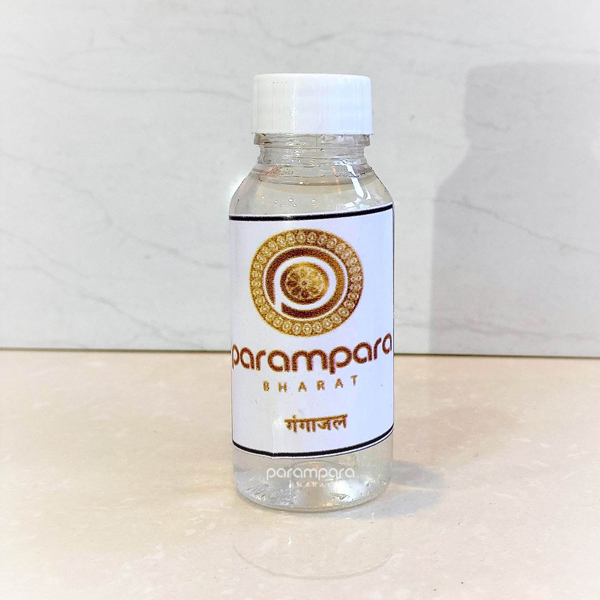

Gangajal
₹55.00
Description
- The river Ganga’s holy water, Gangajal, flowing from the Himalayas, is sacred for its crystal purity as it carries with it essential mix of multi-minerals and unique herbs.
- Sealed hermetically, untouched by human hands or other impurities, we try to keep intact all its natural qualitative aspects that improve digestive organism, preserve elements of its sweetness, coolness and high stimulant properties that it is believed to possess that Gangajal has the ability to enhance and retain wisdom and has the capability to cure many ailments.
- Few drops of Gangajal make everything holy.
Benefits
- Is used in daily pooja for rituals and Abhishek.
- To bathe deity idols.
- Gangajal is full of purest oxygen. Drink a pouch / glass everyday. It would take care of your stomach related problems.
- Enhances food taste, and is used in cooking.
- It also reduces acidity and stomach disorders. Patients are advised to take their medicines with Gangajal for speediest recovery.
Quantity
- 50 ml
Related products
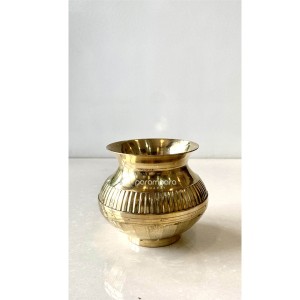
Brass Kalash
Description
- This lovely Kalash can be utilized karwa chauth and any event like wedding , commitment ,diwali , raksha bandhan or in any ceremonies, puja Brass Kalash keeps up an exceptionally propitious job as it is a piece of each religious customs.
- This is made of Brass material which makes it durable.
- Kalash is an important accompaniment in pooja rituals, weddings and important festive occasions.
- The water in Kalash is also used during abhishekam.
- Made in heavy shining brass.
Specifications
- Material - Brass
- Pack of - 1
- Size - (W x H) 8 x 9 cm
- Weight - 146 g
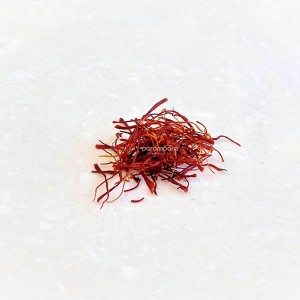
Kesar
Description
- Kesar have been derived from the Northern Indian region, Kashmir, where old saffron was produced.
- Saffron is the most expensive spice in the world.
- Saffron's aroma is unique and there is no substitute for it.
- It is offered to deity idols and afterwards distributed and smeared on the foreheads of devotees.
Quantity
- 0.025 gms
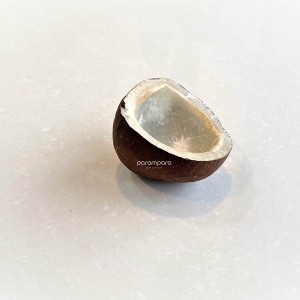
Dry Coconut
Description
- We never offer the coconut as it is.
- We remove the fibre that covers it and offer the fruit that is free from all the external fibre.
- Only then is it possible to break the coconut.
- By breaking the coconut, the water in it flows out.
- The heart is the coconut and it is covered by the fibre of desire.
- The water that flows out is the 'Samskara' or purification. The fibres on the surface are the desires.
- We must strip the heart of all desires and offer the core without the fibre. It then becomes an offering to God.
- If we plant a coconut as it is, in course of time and by watering it, another plant will grow out of it.
Used
- Dry coconuts are used as an offering to deities and especially during the final oblation (purna-ahuti) of any homa/yagna.
- It is filled with sugar and ghee and is then closed with a sacred thread, before offering to the homa fire.
Quantity
- 360 gm - Broken pieces of 2 coconuts
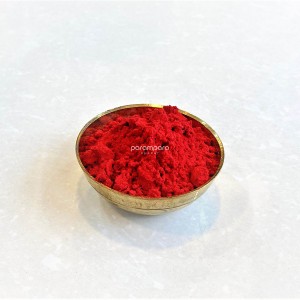
Kumkum Powder
Description
- Kumkum is applied to the forehead.
- The reason for this particular location has to do with the ancient Hindu belief that"the human body is divided into seven vortices of energy,called chakras,beginning at the base of the spine and ending at the top of the head.
- The sixth chakra, also known as the third eye,is centered in the forehead directly between the eyebrows and is believed to be the channel through which humankind opens spiritually to the Divine".
- Thus,the kumkum is placed at the location of the body which is the most holy.
Uses
- Kumkum powder is widely used for worshiping the Hindu goddesses,especially Shakti and Lakshmi.
- Saivites- Followers of Siva usually apply three white horizontal lines with a dot of kumkum at the center.
- Vaisnavas- Followers of Vishnu make use of "white clay to apply two vertical lines joined at the base and intersected by a bright red streak." Many times the white clay is applied in a U-shape.
- Swaminarayana- Followers of the Swaminarayana apply kumkum at the center of the forehead and in between a U-shaped tilaka.The tilaka is normally yellow and made from sandalwood.
- When a girl or a married woman visits a house,it is a sign of respect (in case of an elderly lady) or blessings (in case of a young girl) to offer kumkum to them when they leave.
- When visiting a temple or during a pooja,apply a dot on your forehead.
- In most of India, everyday, married women apply red kumkum in front of their parting on their forehead as a symbol of marriage
Quantity
- 50 gms , 100 gms
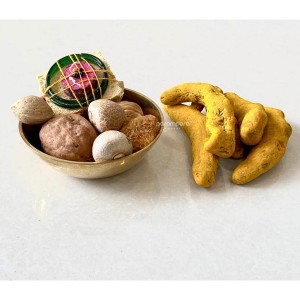
Pooja Ooti
Description
- Essential ingredients for offering to deities during daily worship.
Contents
- Mix of 5 dry fruits Walnut, Almond, Dates, Betelnut, Turmeric (Akhrot, Badam, Kharek, Supari, Haldi) - 5 pieces each.
- Karanda Phani: The vastra (clothing) made out of cotton and haldi (turmeric) and kumkum (vermilion) and Saubhagyalen (i.e green bangles, mangalsutra) is called 'Karanda Phani'.
Quantity
- 1 pcs each
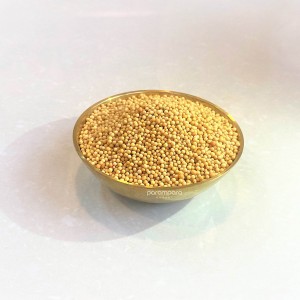
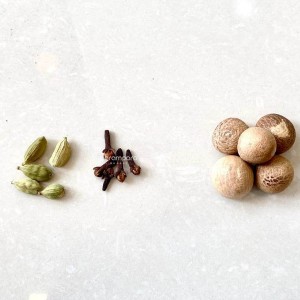
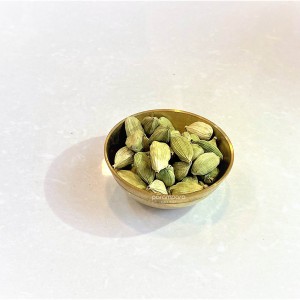
Clove, Cardamom, Betelnut
Description
- Pack of cloves (long), cardamom (elaichi) and betelnut (supari) for use in daily pooja and rituals.
Used
- Clove in pooja rituals for fulfillments of desires and success in work (karya siddhi).
- Cardamom has a special aroma, which is pleasant and is used to attract and invoke deity energies.
- The betel nut is an integral part of the daily or ritualistic Pooja.
- It is also popularly used in the age old- custom of Indian eating.
- The supari is symbolic of the nut of the ego that must be offered on the altar of God.
- It represents the hard, coarse qualities that must be surrendered to God, leaving only the soft, pure qualities.
Quantity
- Clove, Cardamom, Betelnut - set of 5 , or 11 each
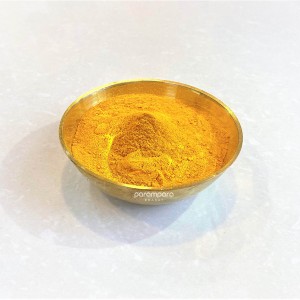
Turmeric Powder (Haldi)
Description
- Turmeric is considered highly auspicious in India and has been used extensively in various Indian ceremonies for millennia.
- Even today it is used in every part of India during wedding ceremonies and religious ceremonies
- Turmeric has played an important role in both Buddhist and Hindu spiritualism. The robes of the Buddhist monks were traditionally colored with a yellow dye made of turmeric.
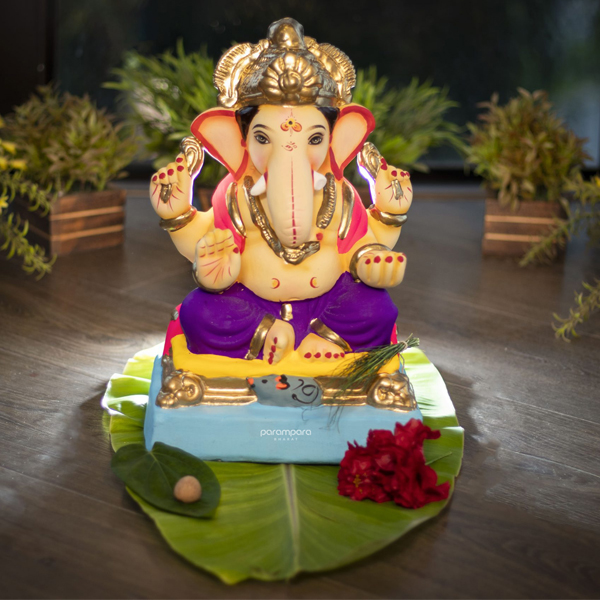
- It is used in pooja to make a form of Lord Ganesha.
- Ganesha, the remover of obstacles, is invoked at the beginning of almost any ceremony and a form of Ganesha for this purpose is made by mixing turmeric with water and forming it into a cone-like shape.
- It is offered to Gods during pooja.
Quantity
- 50 gms , 100 gms

Reviews
There are no reviews yet.