


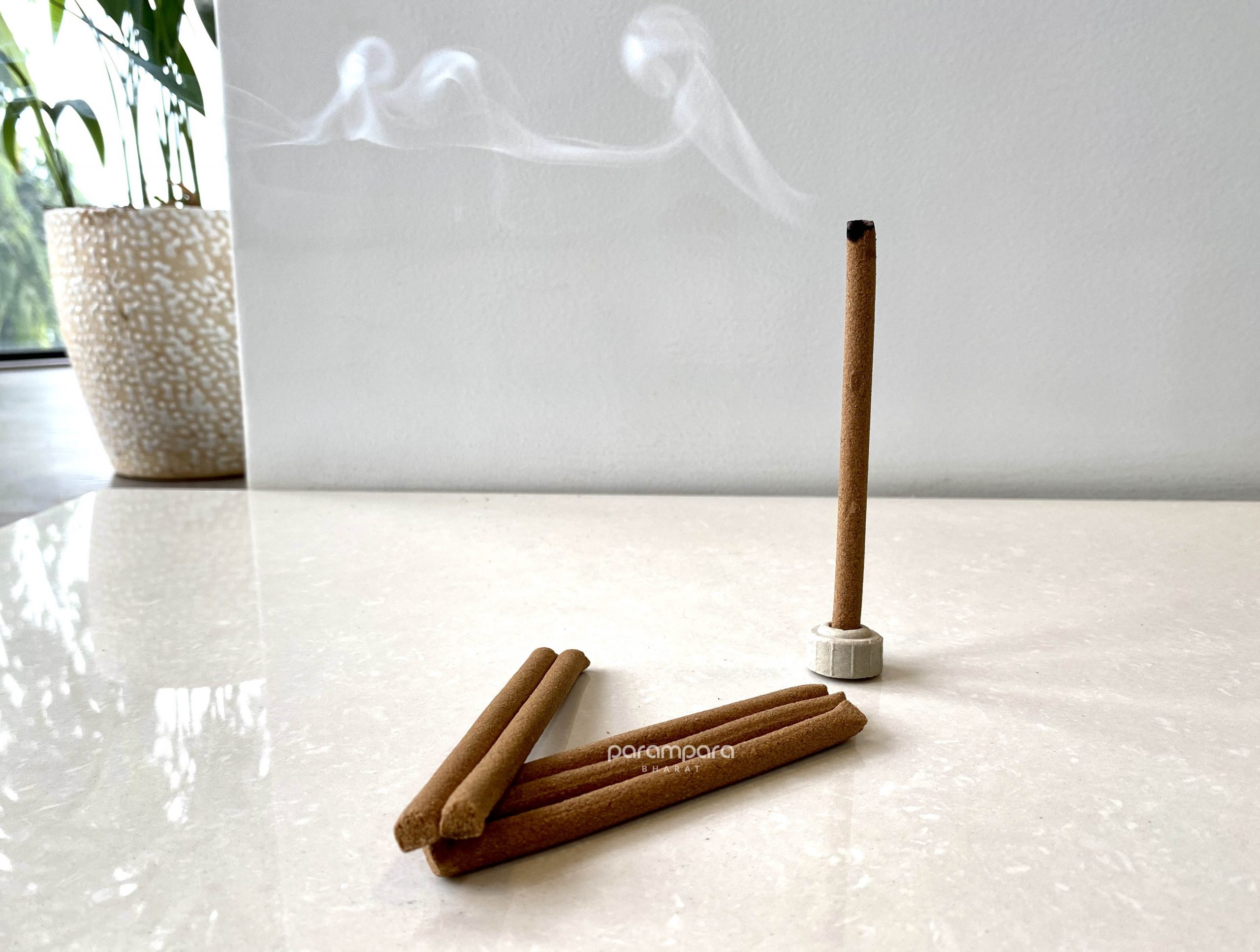

Parampara Dry Dhoop Stick
₹310.00
Description
- Dhoop sticks for lighting during the Havan.
- These aromatic incense create a perfect environment for Agnihotra.
Features
- Enchanting
- Spreading Fragrance
Specifications
- length – 3.5 in
- Quantity – 21 no. of sticks
Related products
Clove, Cardamom, Betelnut
Description
- Pack of cloves (long), cardamom (elaichi) and betelnut (supari) for use in daily pooja and rituals.
Used
- Clove in pooja rituals for fulfillments of desires and success in work (karya siddhi).
- Cardamom has a special aroma, which is pleasant and is used to attract and invoke deity energies.
- The betel nut is an integral part of the daily or ritualistic Pooja.
- It is also popularly used in the age old- custom of Indian eating.
- The supari is symbolic of the nut of the ego that must be offered on the altar of God.
- It represents the hard, coarse qualities that must be surrendered to God, leaving only the soft, pure qualities.
Quantity
- Clove, Cardamom, Betelnut - set of 5 , or 11 each

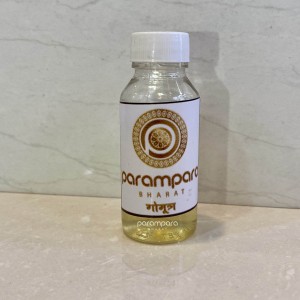
Gomutra
Description
- Being highly recommended by the scriptures, it is considered holy and safe to use.
- The original scriptures of Ayurveda consider cow urine to be the elixir of life.
- Cow urine is an important part of many Indian rituals/daily pooja.
- Gomutra has the ability to attract divine consciousness which in turn creates an increase in the Sattva component and therefore facilitates spiritual healing.
- The Indian cow has the ability to attract the frequencies of all the deities in the universe.
Quantity
- 200 ml
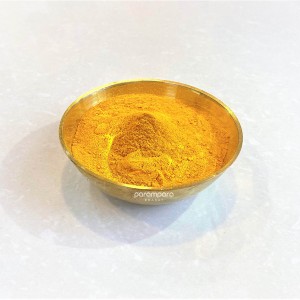
Turmeric Powder (Haldi)
Description
- Turmeric is considered highly auspicious in India and has been used extensively in various Indian ceremonies for millennia.
- Even today it is used in every part of India during wedding ceremonies and religious ceremonies
- Turmeric has played an important role in both Buddhist and Hindu spiritualism. The robes of the Buddhist monks were traditionally colored with a yellow dye made of turmeric.
- It is used in pooja to make a form of Lord Ganesha.
- Ganesha, the remover of obstacles, is invoked at the beginning of almost any ceremony and a form of Ganesha for this purpose is made by mixing turmeric with water and forming it into a cone-like shape.
- It is offered to Gods during pooja.
Quantity
- 50 gms , 100 gms

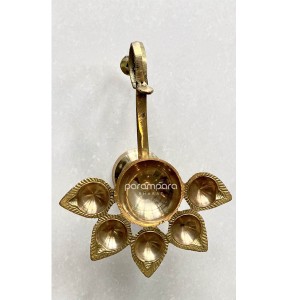
Brass Panchaarti (Small)
Description
- The importance of lighting a diya during worship can be traced back to Vedas.
- Light symbolizes knowledge and darkness, ignorance.
- The Lord is the “Knowledge Principle” (chaitanya) who is the source, the enlivener and the illuminator of all knowledge.
- Hence light is worshipped as the Lord Himself. Knowledge removes ignorance just as light removes darkness.
- Also knowledge is a lasting inner wealth by which all outer achievements can be accomplished.
- Hence we light the lamp to bow down to knowledge as the greatest of all forms of wealth.
- We therefore keep a lamp lit during all auspicious occasions as a witness to our thoughts and actions.
Specifications
- Material – Brass
- Pack of – 1
- Weight – 245 g

Darbha Grass
Description
- Darbha Grass or Kusha Grass is scientifically known as Desmostachya bipinnata, commonly known in English by the names Halfa grass, Big Cordgrss, and Salt read-geass, is an Old World Perennial Grass. Kusha grass is a special type of grass which is used in Hindu rituals Pooja and Worship.
Uses
- While chanting hymns, hold a bunch of Darbha grass, dipping the tip into a pot full of water. The positive vibrations of the mantras recited are believed to be absorbed by water in the pot through the grass. Then the recharged water is sprinkled around to purify the surroundings.
- Also, while performing fire ritual, Darbha grass is placed on the four sides of the agni kund or sacred fireplace, While chanting and reciting verses from the Vedas, one has to wear a ring made of Darbha grass on one’s right hand ring finger as a protective shield from negative vibrations.
- The number of Darbha leaves used depends on the ceremony that is being performed. For ceremonies related to death, only one Darbha leaf is used. For auspicious and daily rituals, a ring made of two leaves is used for inauspicious but not death related functions — Amavasya Tharpanam, Pithra Pooja — a three - leaf Darbha ring is used. For temple prayers and pooja, a four-leaf Darbha ring is used.
Quantity
- Set of 5
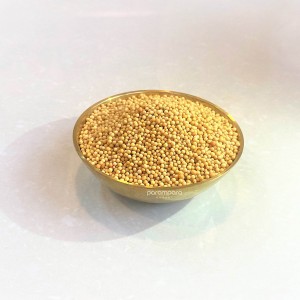

Brass Samai (Big)
Description
- Oil lamps are an integral part of every puja ritual and yajna.
- During the Aarti, the lamp is lit and is rotated in clockwise direction as a sign of invoking the energies of the deities.
- After the completion of Aarti, all devotees take the blessings from fire god.
- This Samai can lit five wicks simultaneously and has a holder in the center.
- Its religious appeal makes it a must-have for every altar to invoke the divine blessings.
- Made of thick brass with long lasting finish.
- Artistic carving and fine finish.
Specifications
- Material - Brass
- Pack of - 1
- Size - 65 cm (Height) , (Top W) 15 cm x 13 cm (Bottom W)
- Weight - 3 kg

Reviews
There are no reviews yet.