


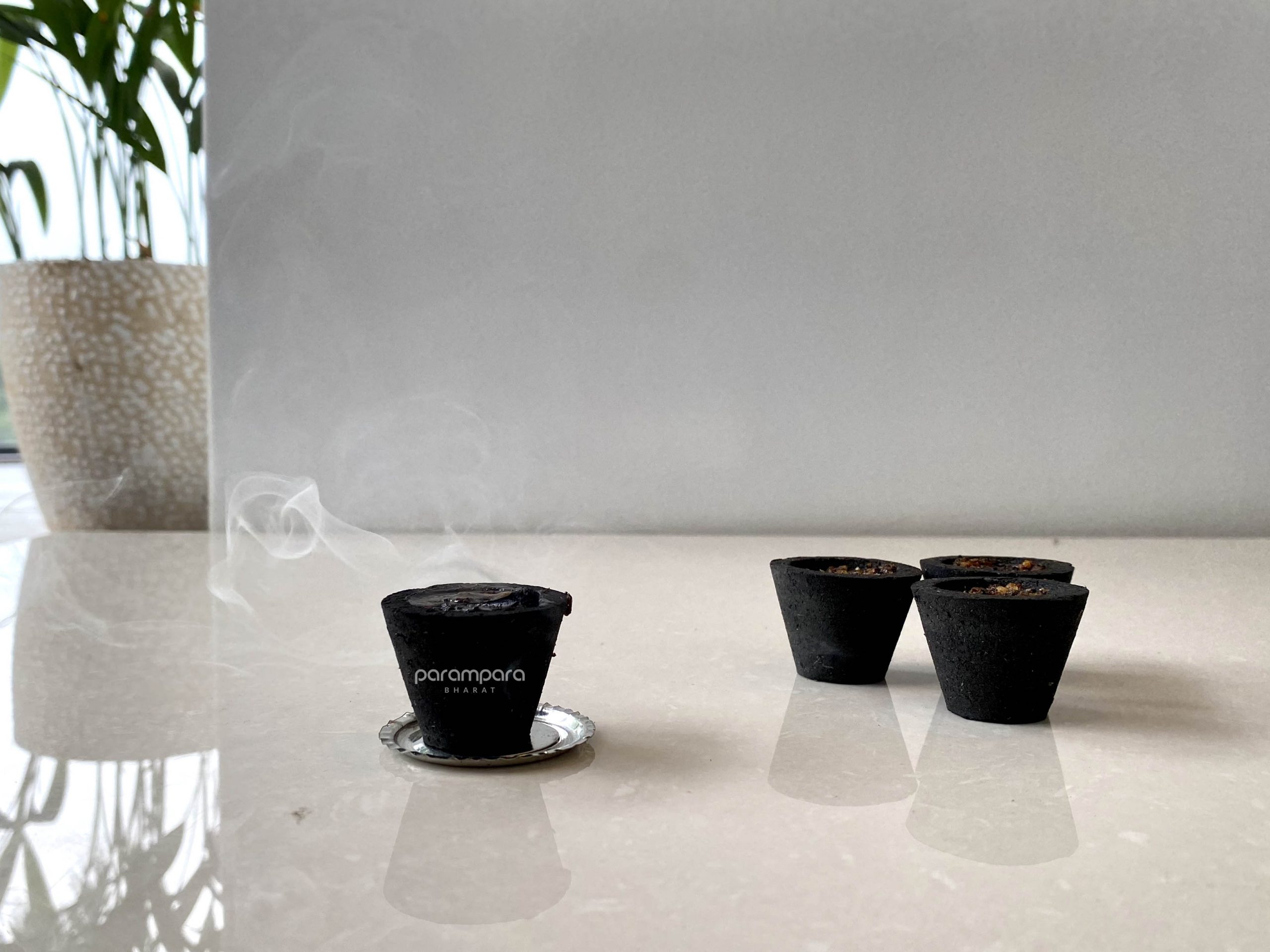

Parampara Cup Sambrani
₹200.00
Description
- Parampara Cup Sambrani is made using rare herbs, flowers, resins, benzoin and essential oils and is deal for prayers and meditation. It is also a natural disinfectant.
Uses
- Hold the cup by the tip of the narrow stem.
- Light the upper side rim of the cup over fire.
- Wait till the entire rim starts burning evenly.
- After the entire rim glows, blow out the flame and experience pure loban (Benzoin) fragrance.
- Keep the cup away from strong winds of fan.
- Keep out of the reach of children.
Specifications
- Size – ( Top D x Bottom D x H) 1.25 x 0.8 x 1 in
- Quantity – 12 no. of sticks
Related products
Brass Kalash
Description
- This lovely Kalash can be utilized karwa chauth and any event like wedding , commitment ,diwali , raksha bandhan or in any ceremonies, puja Brass Kalash keeps up an exceptionally propitious job as it is a piece of each religious customs.
- This is made of Brass material which makes it durable.
- Kalash is an important accompaniment in pooja rituals, weddings and important festive occasions.
- The water in Kalash is also used during abhishekam.
- Made in heavy shining brass.
Specifications
- Material - Brass
- Pack of - 1
- Size - (W x H) 8 x 9 cm
- Weight - 146 g
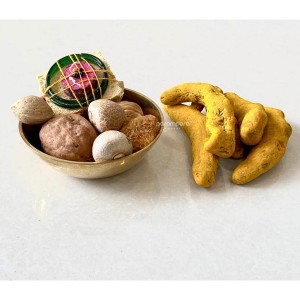
Pooja Ooti
Description
- Essential ingredients for offering to deities during daily worship.
Contents
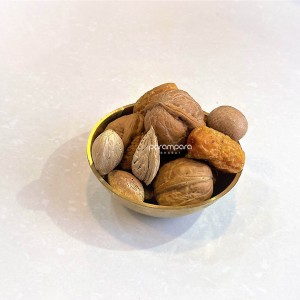
- Mix of 5 dry fruits Walnut, Almond, Dates, Betelnut, Turmeric (Akhrot, Badam, Kharek, Supari, Haldi) - 5 pieces each.
- Karanda Phani: The vastra (clothing) made out of cotton and haldi (turmeric) and kumkum (vermilion) and Saubhagyalen (i.e green bangles, mangalsutra) is called 'Karanda Phani'.
Quantity
- 1 pcs each
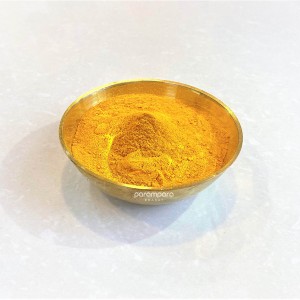
Turmeric Powder (Haldi)
Description
- Turmeric is considered highly auspicious in India and has been used extensively in various Indian ceremonies for millennia.
- Even today it is used in every part of India during wedding ceremonies and religious ceremonies
- Turmeric has played an important role in both Buddhist and Hindu spiritualism. The robes of the Buddhist monks were traditionally colored with a yellow dye made of turmeric.
- It is used in pooja to make a form of Lord Ganesha.
- Ganesha, the remover of obstacles, is invoked at the beginning of almost any ceremony and a form of Ganesha for this purpose is made by mixing turmeric with water and forming it into a cone-like shape.
- It is offered to Gods during pooja.
Quantity
- 50 gms , 100 gms
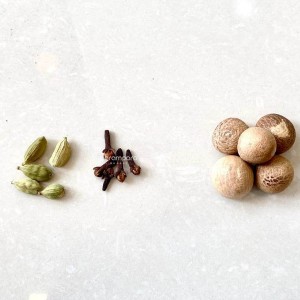
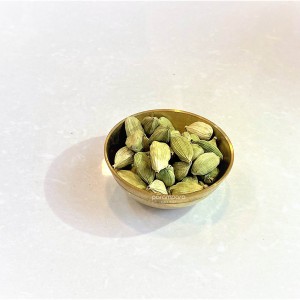
Clove, Cardamom, Betelnut
Description
- Pack of cloves (long), cardamom (elaichi) and betelnut (supari) for use in daily pooja and rituals.
Used
- Clove in pooja rituals for fulfillments of desires and success in work (karya siddhi).
- Cardamom has a special aroma, which is pleasant and is used to attract and invoke deity energies.
- The betel nut is an integral part of the daily or ritualistic Pooja.
- It is also popularly used in the age old- custom of Indian eating.
- The supari is symbolic of the nut of the ego that must be offered on the altar of God.
- It represents the hard, coarse qualities that must be surrendered to God, leaving only the soft, pure qualities.
Quantity
- Clove, Cardamom, Betelnut - set of 5 , or 11 each
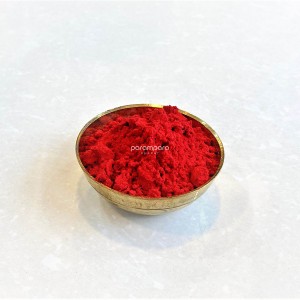
Kumkum Powder
Description
- Kumkum is applied to the forehead.
- The reason for this particular location has to do with the ancient Hindu belief that"the human body is divided into seven vortices of energy,called chakras,beginning at the base of the spine and ending at the top of the head.
- The sixth chakra, also known as the third eye,is centered in the forehead directly between the eyebrows and is believed to be the channel through which humankind opens spiritually to the Divine".
- Thus,the kumkum is placed at the location of the body which is the most holy.
Uses
- Kumkum powder is widely used for worshiping the Hindu goddesses,especially Shakti and Lakshmi.
- Saivites- Followers of Siva usually apply three white horizontal lines with a dot of kumkum at the center.
- Vaisnavas- Followers of Vishnu make use of "white clay to apply two vertical lines joined at the base and intersected by a bright red streak." Many times the white clay is applied in a U-shape.
- Swaminarayana- Followers of the Swaminarayana apply kumkum at the center of the forehead and in between a U-shaped tilaka.The tilaka is normally yellow and made from sandalwood.
- When a girl or a married woman visits a house,it is a sign of respect (in case of an elderly lady) or blessings (in case of a young girl) to offer kumkum to them when they leave.
- When visiting a temple or during a pooja,apply a dot on your forehead.
- In most of India, everyday, married women apply red kumkum in front of their parting on their forehead as a symbol of marriage
Quantity
- 50 gms , 100 gms
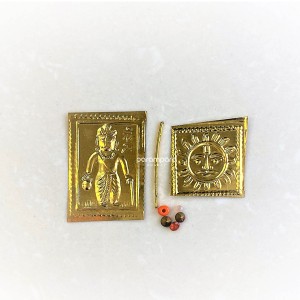
Vastu pratima
Description
- Vastu is the science of direction that combines all the five elements of nature and balances them with man and materials.
- It is all about the interaction of various forms of best effect on a living person.
- It aims to create a subtle conducive atmosphere in a structure in which we can bring the best in ourselves, thereby paving the way for enhanced health, wealth, prosperity and happiness in an enlightened environment.
- Like any other science, vaastu is universal, rational, practical and utilitarian. It is not a religion but a science.
Uses
- Place this Vastu pratima under the ground in the North east corner of the house, while doing vastu pooja.

Reviews
There are no reviews yet.