



Brass Bell
₹150.00
Description
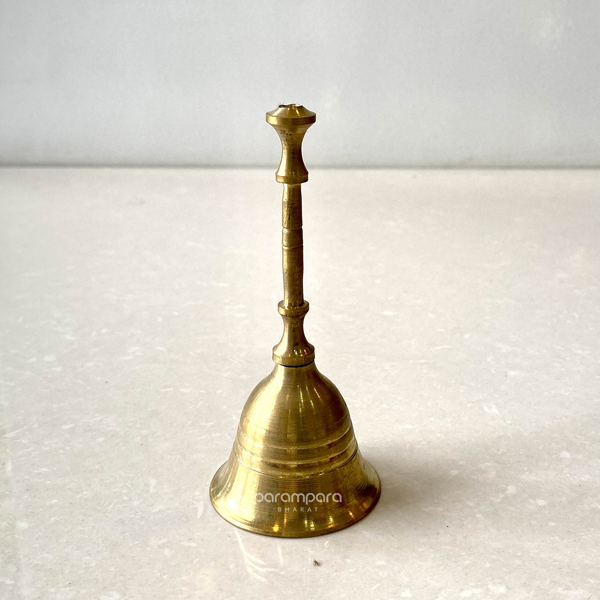
- This beautifully detailed brass bell is designed to be rung during the puja.
- The symbolic element of ringing a bell during a Puja is that the chime of the bell, especially that of the deep, sonorous bell, is very similar to the sound of the Primal Sound, the “Aum”.
- The ringing of the bell is said to dispel evil forces, focus the mind, and its beauty is said to attract even the gods, thus taking away everything that is time-space oriented, and finally letting the devotee touch the plane of the absolute, the one that simply “IS”.
- Made of thick brass with long lasting finish.
Specifications
- Material – Brass
- Pack of – 1
- Weight – 47 g
Related products
Copper Panchapatra
Description
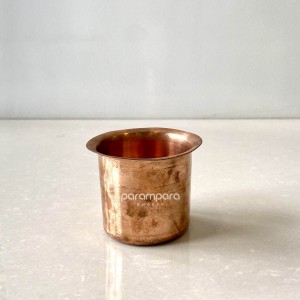
- copper panchpatra is an integral part of poojas where in the holy charan amrit is placed before the pooja and then distributed upon the Pooja's completion.
- The Charanamrit literally means Amrit (Holy Nectar) from the Charan (Feet of the Lord) of the worshipped deity and is partaken as a sacred offering or a holy gift after the completion of the pooja.
- In many Hindu homes the cooked food is first offered to the Lord each day and is then consumed by everyone else.
- The offered food is mixed with the rest of the food and then served as prasad.
Specifications
- Material - Copper
- Pack of - 1
- Size - (W x H) 7 x 6 cm
- Weight - 33 g
- Capacity - 100 ml

Chandan Powder
Description
- Chandan or sandal is well known for its aroma and cooling effect on human body.
- Sandal powder is an important pooja item.
- Sandal paste is used in worshiping deities especially for applying tilak on the forehead of sacred idols.
- After offering to deities, devotees can apply it between the eyebrows or on the forehead to cool the nervous system and to stimulate spiritual energy.
- The paste can help heal skin diseases such as infectious sores, ulcers, acne and rashes.
- Sandalwood powder helps smooth and cool the skin, and can be made into a paste, lotion or soap for cleansing, calming and hydrating sensitive or aging skin.
- Sandalwood balances the circulatory, digestive, respiratory and nervous systems.
Quantity
- 20 gms
Kumkum Powder
Description
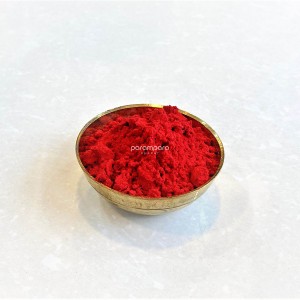
- Kumkum is applied to the forehead.
- The reason for this particular location has to do with the ancient Hindu belief that"the human body is divided into seven vortices of energy,called chakras,beginning at the base of the spine and ending at the top of the head.
- The sixth chakra, also known as the third eye,is centered in the forehead directly between the eyebrows and is believed to be the channel through which humankind opens spiritually to the Divine".
- Thus,the kumkum is placed at the location of the body which is the most holy.
Uses
- Kumkum powder is widely used for worshiping the Hindu goddesses,especially Shakti and Lakshmi.
- Saivites- Followers of Siva usually apply three white horizontal lines with a dot of kumkum at the center.
- Vaisnavas- Followers of Vishnu make use of "white clay to apply two vertical lines joined at the base and intersected by a bright red streak." Many times the white clay is applied in a U-shape.
- Swaminarayana- Followers of the Swaminarayana apply kumkum at the center of the forehead and in between a U-shaped tilaka.The tilaka is normally yellow and made from sandalwood.
- When a girl or a married woman visits a house,it is a sign of respect (in case of an elderly lady) or blessings (in case of a young girl) to offer kumkum to them when they leave.
- When visiting a temple or during a pooja,apply a dot on your forehead.
- In most of India, everyday, married women apply red kumkum in front of their parting on their forehead as a symbol of marriage
Quantity
- 50 gms , 100 gms

Brass Samai (Big)
Description
- Oil lamps are an integral part of every puja ritual and yajna.
- During the Aarti, the lamp is lit and is rotated in clockwise direction as a sign of invoking the energies of the deities.
- After the completion of Aarti, all devotees take the blessings from fire god.
- This Samai can lit five wicks simultaneously and has a holder in the center.
- Its religious appeal makes it a must-have for every altar to invoke the divine blessings.
- Made of thick brass with long lasting finish.
- Artistic carving and fine finish.
Specifications
- Material - Brass
- Pack of - 1
- Size - 65 cm (Height) , (Top W) 15 cm x 13 cm (Bottom W)
- Weight - 3 kg

Darbha Grass
Description
- Darbha Grass or Kusha Grass is scientifically known as Desmostachya bipinnata, commonly known in English by the names Halfa grass, Big Cordgrss, and Salt read-geass, is an Old World Perennial Grass. Kusha grass is a special type of grass which is used in Hindu rituals Pooja and Worship.
Uses
- While chanting hymns, hold a bunch of Darbha grass, dipping the tip into a pot full of water. The positive vibrations of the mantras recited are believed to be absorbed by water in the pot through the grass. Then the recharged water is sprinkled around to purify the surroundings.
- Also, while performing fire ritual, Darbha grass is placed on the four sides of the agni kund or sacred fireplace, While chanting and reciting verses from the Vedas, one has to wear a ring made of Darbha grass on one’s right hand ring finger as a protective shield from negative vibrations.
- The number of Darbha leaves used depends on the ceremony that is being performed. For ceremonies related to death, only one Darbha leaf is used. For auspicious and daily rituals, a ring made of two leaves is used for inauspicious but not death related functions — Amavasya Tharpanam, Pithra Pooja — a three - leaf Darbha ring is used. For temple prayers and pooja, a four-leaf Darbha ring is used.
Quantity
- Set of 5
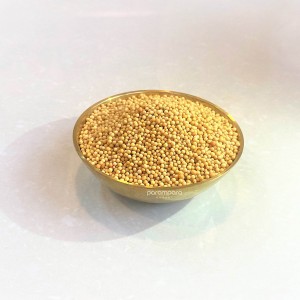
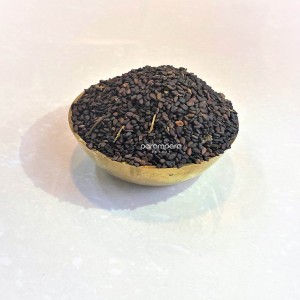
Black sesame (Kala Teel)
Description
- It is also known as Kura Goma. These seeds are used for purifying the body.
- Water boiled with these seeds makes body pure.
- Black til is mixed in either milk/ water and then offered to Lord Shiva in the form of Abhishek.
- It is equivalent to doing abhishek with 'punchamrat' (a combination of 5 things).
- This seed is very dear to the Pitars (deceased ancestors).
- Black sesame or kaala teel is part of hawan samagri, mix up in hawan samagri as homam dravya , exotice herbs.
- In shani, hanuman, shiva pooja and hawns major samagri used is black teel. on the day of saturday and tuesday with chameli oil black teel is offers to lord hanumanji, too remove saturn effect.
Quantity
- 250, 500 gms

Havan Samagri
Description
- The Havan Samagri is a sacred offering in the yagna and each item of the samagri is significant.
- The havan samagri is offered in the fire during yagnas and homas, after completion of every mantra chant.
- Havan Samagri (a mixture of various dried herbal , roots and leaves) is offered in the ablazed fire which disseminates in micro form, in the air, to purify the environment besides activating the air as disinfectant germicidal agent.
- It is anti-bacterial and is made from high grade raw materials. It is 100% natural Havan Samagri.
Contents
- Made from ayurvedic havan exotic herbs, Black til, Jo, 32 types of dhoop, Bhimseni kapoor, rose petals, sandalwood powder, lobaan, ghee, chandan
Quantity
- 100 gms

Reviews
There are no reviews yet.