


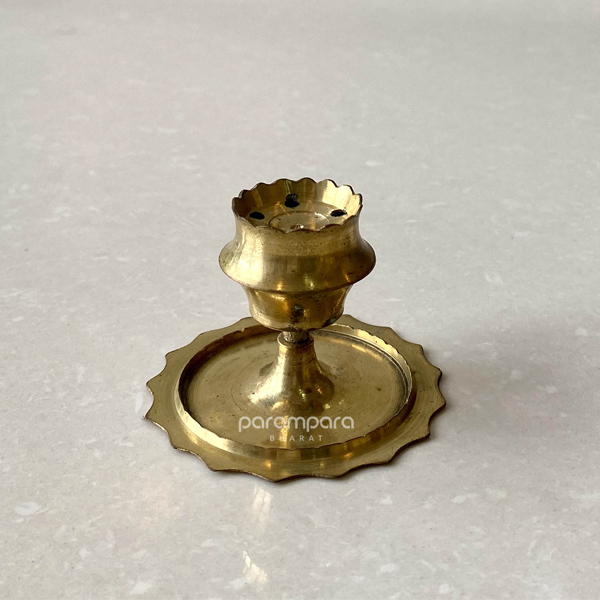
Brass Agarbatti Stand
₹180.00
Description
- A mini Agarbatti Stand made in brass for mini altars or small pujas.
- Its compact size makes it a good fit for travel needs.
- The central part is in the form of the Dome, to hold sticks and has base flower shape below it.
- Made of brass with long lasting finish.
- Brass is well known for its grasping capacity.It grasps the divine spirit upto 30%, when compared to other metals. The spiritual vibrations are attracted towards these shining idols easily.
Specifications
- Material – Brass
- Pack of – 1
- Weight – 28 g
Related products
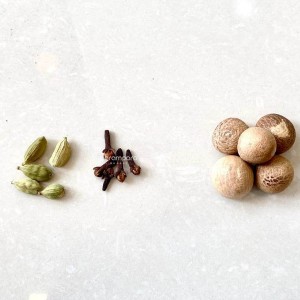
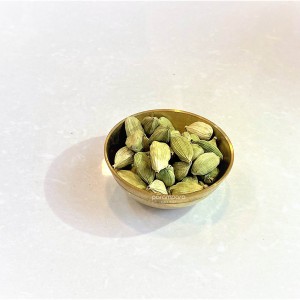
Clove, Cardamom, Betelnut
Description
- Pack of cloves (long), cardamom (elaichi) and betelnut (supari) for use in daily pooja and rituals.
Used
- Clove in pooja rituals for fulfillments of desires and success in work (karya siddhi).
- Cardamom has a special aroma, which is pleasant and is used to attract and invoke deity energies.
- The betel nut is an integral part of the daily or ritualistic Pooja.
- It is also popularly used in the age old- custom of Indian eating.
- The supari is symbolic of the nut of the ego that must be offered on the altar of God.
- It represents the hard, coarse qualities that must be surrendered to God, leaving only the soft, pure qualities.
Quantity
- Clove, Cardamom, Betelnut - set of 5 , or 11 each
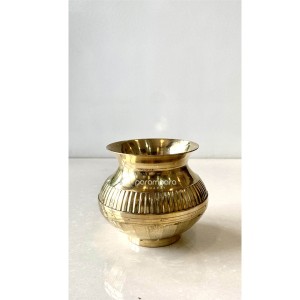
Brass Kalash
Description
- This lovely Kalash can be utilized karwa chauth and any event like wedding , commitment ,diwali , raksha bandhan or in any ceremonies, puja Brass Kalash keeps up an exceptionally propitious job as it is a piece of each religious customs.
- This is made of Brass material which makes it durable.
- Kalash is an important accompaniment in pooja rituals, weddings and important festive occasions.
- The water in Kalash is also used during abhishekam.
- Made in heavy shining brass.
Specifications
- Material - Brass
- Pack of - 1
- Size - (W x H) 8 x 9 cm
- Weight - 146 g
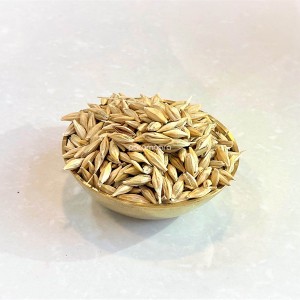
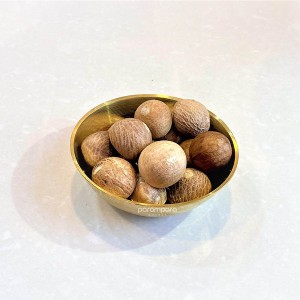
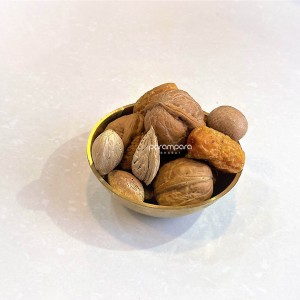
Supari / Betelnut
Description
- The betel nut/Supari is an integral part of the daily or ritualistic Pooja.
- It is also popularly used in the age old-custom of Indian eating.
- The supari is symbolic of the nut of the ego that must be offered on the altar of God.
- It represents the hard, coarse qualities that must be surrendered to God, leaving only the soft, pure qualities.
- Mostly symbolic, the Supari is many a times traditionally represented as the Nine planets (in the Navgrah Pooja) and takes the form of Deities like Brahma, Surya and others during different Pooja.
Quantity
- 11 pieces
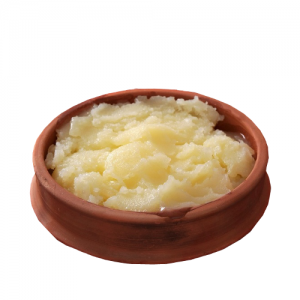
Ghee
Description
- Ghee holds its position of purity in nearly all the Hindu pooja rituals.
- In Hindu mythology, Prajapati/Brahma, created Ghee by rubbing or "churning" his hands together and then poured it into fire to engender his progeny.
- So, whenever the rituals are performed, the pouring of Ghee into fire symbolises a re - enactment of creation.
Quantity
- 200 gms
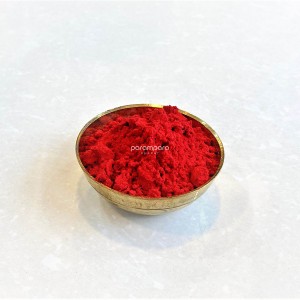
Kumkum Powder
Description
- Kumkum is applied to the forehead.
- The reason for this particular location has to do with the ancient Hindu belief that"the human body is divided into seven vortices of energy,called chakras,beginning at the base of the spine and ending at the top of the head.
- The sixth chakra, also known as the third eye,is centered in the forehead directly between the eyebrows and is believed to be the channel through which humankind opens spiritually to the Divine".
- Thus,the kumkum is placed at the location of the body which is the most holy.
Uses
- Kumkum powder is widely used for worshiping the Hindu goddesses,especially Shakti and Lakshmi.
- Saivites- Followers of Siva usually apply three white horizontal lines with a dot of kumkum at the center.
- Vaisnavas- Followers of Vishnu make use of "white clay to apply two vertical lines joined at the base and intersected by a bright red streak." Many times the white clay is applied in a U-shape.
- Swaminarayana- Followers of the Swaminarayana apply kumkum at the center of the forehead and in between a U-shaped tilaka.The tilaka is normally yellow and made from sandalwood.
- When a girl or a married woman visits a house,it is a sign of respect (in case of an elderly lady) or blessings (in case of a young girl) to offer kumkum to them when they leave.
- When visiting a temple or during a pooja,apply a dot on your forehead.
- In most of India, everyday, married women apply red kumkum in front of their parting on their forehead as a symbol of marriage
Quantity
- 50 gms , 100 gms
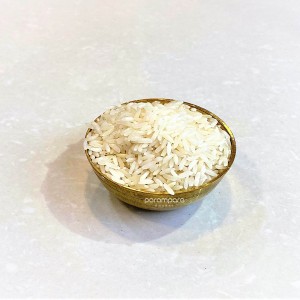
Akshat / Rice
Description
- Akshat basically consists of uncooked un-broken pieces of rice.
- Akshat is believed to be equal to offering clothes, jewelry, food, or any other offering.
- Akshat is usually thrown over the head of the devotees during Pooja and during functions like marriage and other auspicious events.
- Akshat / Rice Grains is one of the primary things without which the worship of the deity cannot be accomplished in a proper way.
- They are actually the symbols of prosperity and wealth.
Quantity
- 250 gms

Reviews
There are no reviews yet.