



Previous product

Back to products
Brass Attar Dani
₹450.00
Next product
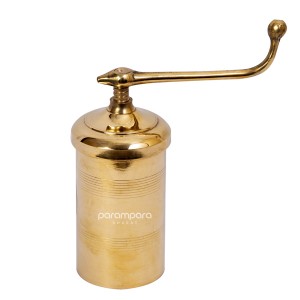
Brass Chakli Maker
₹999.00 ₹599.00
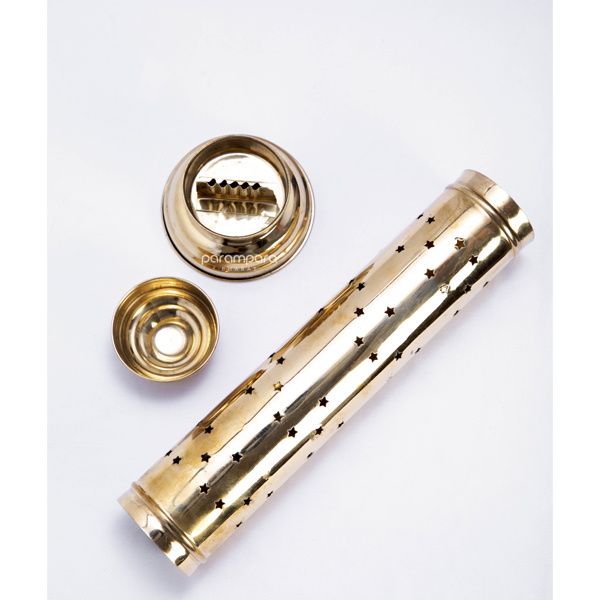
Brass Agarbatti Holder
₹395.00
Description
- Agarbatti Stands for Puja are famous for worshipping Gods and best for holding the incense sticks to stand firmly.
- It is made up of brass that makes it more beautiful and durable.
- This Agarbatti holder Can Be Used Both In Houses And Offices.
- It Is Totally Safe To Use And Saves Children From Burns It Is Fitted With A Separate Ash Collector That Keeps The Puja House, Room And Office Place Clean.
- It has the capacity to hold 5 sticks at a time.
- Easy to clean.
Specifications
- Material – Brass
- Pack of – 1
- Size – (W x H) 4.5 x 27.5 cm
- Weight – 130 g
Related products

Chandan Powder
Description
- Chandan or sandal is well known for its aroma and cooling effect on human body.
- Sandal powder is an important pooja item.
- Sandal paste is used in worshiping deities especially for applying tilak on the forehead of sacred idols.
- After offering to deities, devotees can apply it between the eyebrows or on the forehead to cool the nervous system and to stimulate spiritual energy.
- The paste can help heal skin diseases such as infectious sores, ulcers, acne and rashes.
- Sandalwood powder helps smooth and cool the skin, and can be made into a paste, lotion or soap for cleansing, calming and hydrating sensitive or aging skin.
- Sandalwood balances the circulatory, digestive, respiratory and nervous systems.
Quantity
- 20 gms
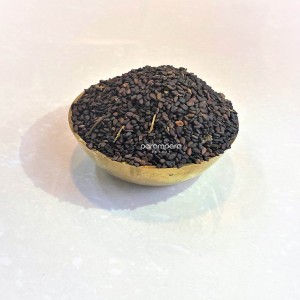
Black sesame (Kala Teel)
Description
- It is also known as Kura Goma. These seeds are used for purifying the body.
- Water boiled with these seeds makes body pure.
- Black til is mixed in either milk/ water and then offered to Lord Shiva in the form of Abhishek.
- It is equivalent to doing abhishek with 'punchamrat' (a combination of 5 things).
- This seed is very dear to the Pitars (deceased ancestors).
- Black sesame or kaala teel is part of hawan samagri, mix up in hawan samagri as homam dravya , exotice herbs.
- In shani, hanuman, shiva pooja and hawns major samagri used is black teel. on the day of saturday and tuesday with chameli oil black teel is offers to lord hanumanji, too remove saturn effect.
Quantity
- 250, 500 gms
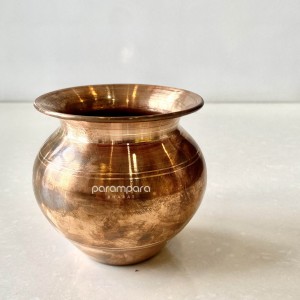
Cooper Plain Kalash
Description
- The Kalash symbolically represents creation. The vacant pot, symbolizes earth, and the water filled symbolizes the primordial water from which life began on earth.
- It is filled with water (preferably the water of holy Ganga, any sacred river or clean, running water).
- Its top open end holds betel or mango leaves and a red-yellow sanctified thread (kalawa or mauli) is tied around its neck.
- This kalash is placed on the pujavedi (worship dais or table) near the idols or pictures of the deity. It is placed facing the North, in the center.
- This positioning signifies balance; balance that one needs to achieve success in every walk of life.
- Often it is topped by a coconut or a deepak and kept on the sacred Vedic swastika symbol or a Vedic swastika is drawn on it by using wet vermillion, sandal-wood powder and turmeric.
Specifications
- Material: Copper
- Pack of - 1
- Size - (Top W x H): 8.5 x 9 cm
- Weight - 118 g
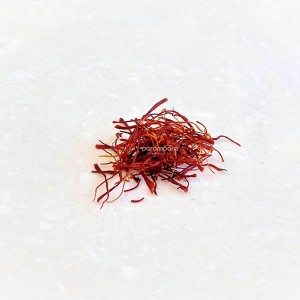
Kesar
Description
- Kesar have been derived from the Northern Indian region, Kashmir, where old saffron was produced.
- Saffron is the most expensive spice in the world.
- Saffron's aroma is unique and there is no substitute for it.
- It is offered to deity idols and afterwards distributed and smeared on the foreheads of devotees.
Quantity
- 0.025 gms
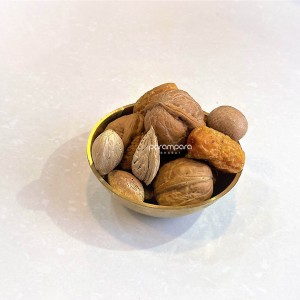
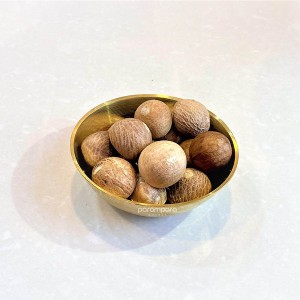
Supari / Betelnut
Description
- The betel nut/Supari is an integral part of the daily or ritualistic Pooja.
- It is also popularly used in the age old-custom of Indian eating.
- The supari is symbolic of the nut of the ego that must be offered on the altar of God.
- It represents the hard, coarse qualities that must be surrendered to God, leaving only the soft, pure qualities.
- Mostly symbolic, the Supari is many a times traditionally represented as the Nine planets (in the Navgrah Pooja) and takes the form of Deities like Brahma, Surya and others during different Pooja.
Quantity
- 11 pieces
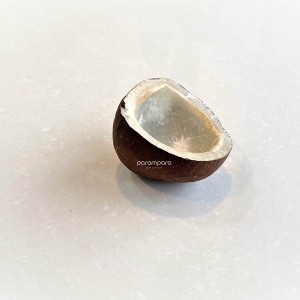
Dry Coconut
Description
- We never offer the coconut as it is.
- We remove the fibre that covers it and offer the fruit that is free from all the external fibre.
- Only then is it possible to break the coconut.
- By breaking the coconut, the water in it flows out.
- The heart is the coconut and it is covered by the fibre of desire.
- The water that flows out is the 'Samskara' or purification. The fibres on the surface are the desires.
- We must strip the heart of all desires and offer the core without the fibre. It then becomes an offering to God.
- If we plant a coconut as it is, in course of time and by watering it, another plant will grow out of it.
Used
- Dry coconuts are used as an offering to deities and especially during the final oblation (purna-ahuti) of any homa/yagna.
- It is filled with sugar and ghee and is then closed with a sacred thread, before offering to the homa fire.
Quantity
- 360 gm - Broken pieces of 2 coconuts
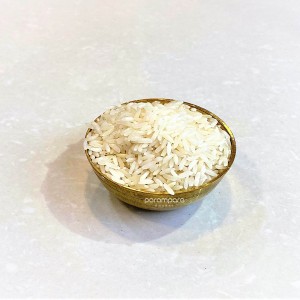
Akshat / Rice
Description
- Akshat basically consists of uncooked un-broken pieces of rice.
- Akshat is believed to be equal to offering clothes, jewelry, food, or any other offering.
- Akshat is usually thrown over the head of the devotees during Pooja and during functions like marriage and other auspicious events.
- Akshat / Rice Grains is one of the primary things without which the worship of the deity cannot be accomplished in a proper way.
- They are actually the symbols of prosperity and wealth.
Quantity
- 250 gms

Reviews
There are no reviews yet.